Click here to

Clothing Manufacturer in Bangladesh Since 1987
Click here to
Click here to

Click here to

Click here to

Click here to

Click here to

Click here to
Click here to

Click here to

Click here to

Click here to
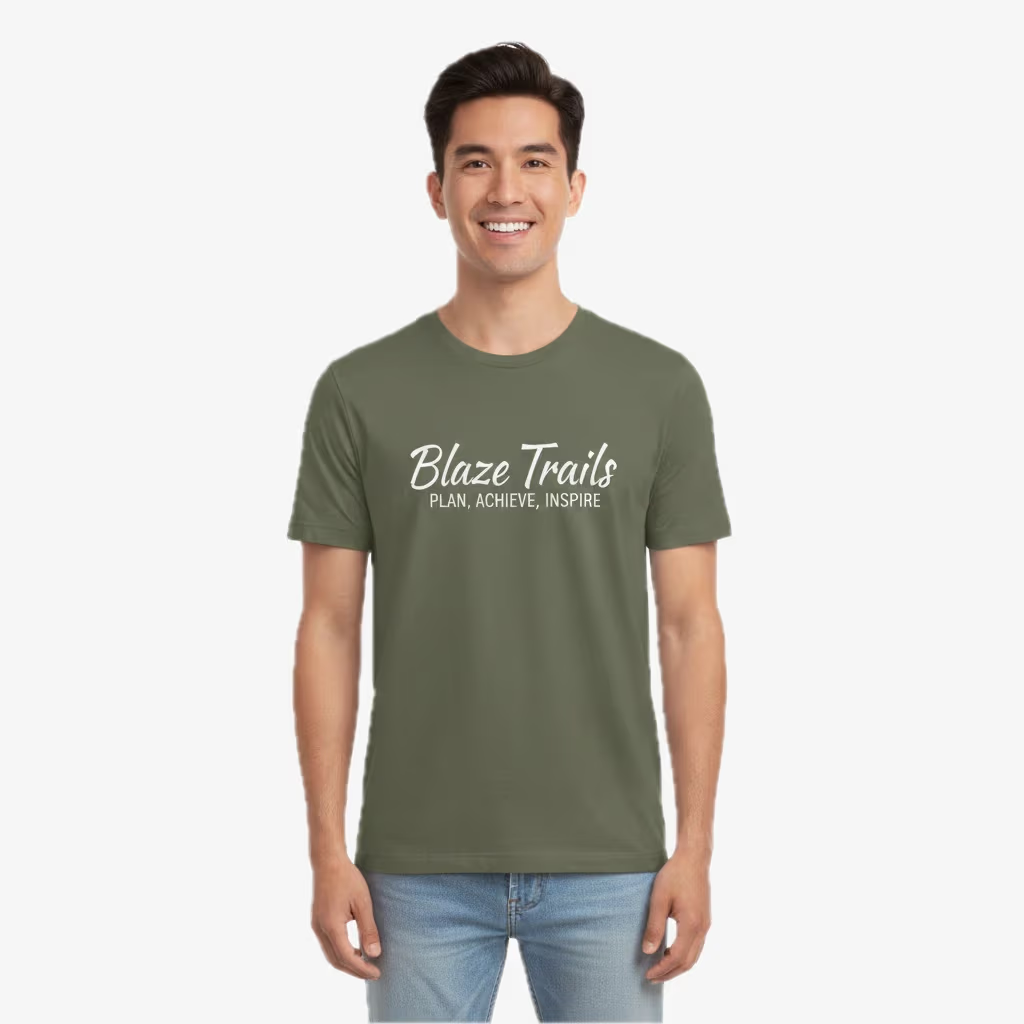
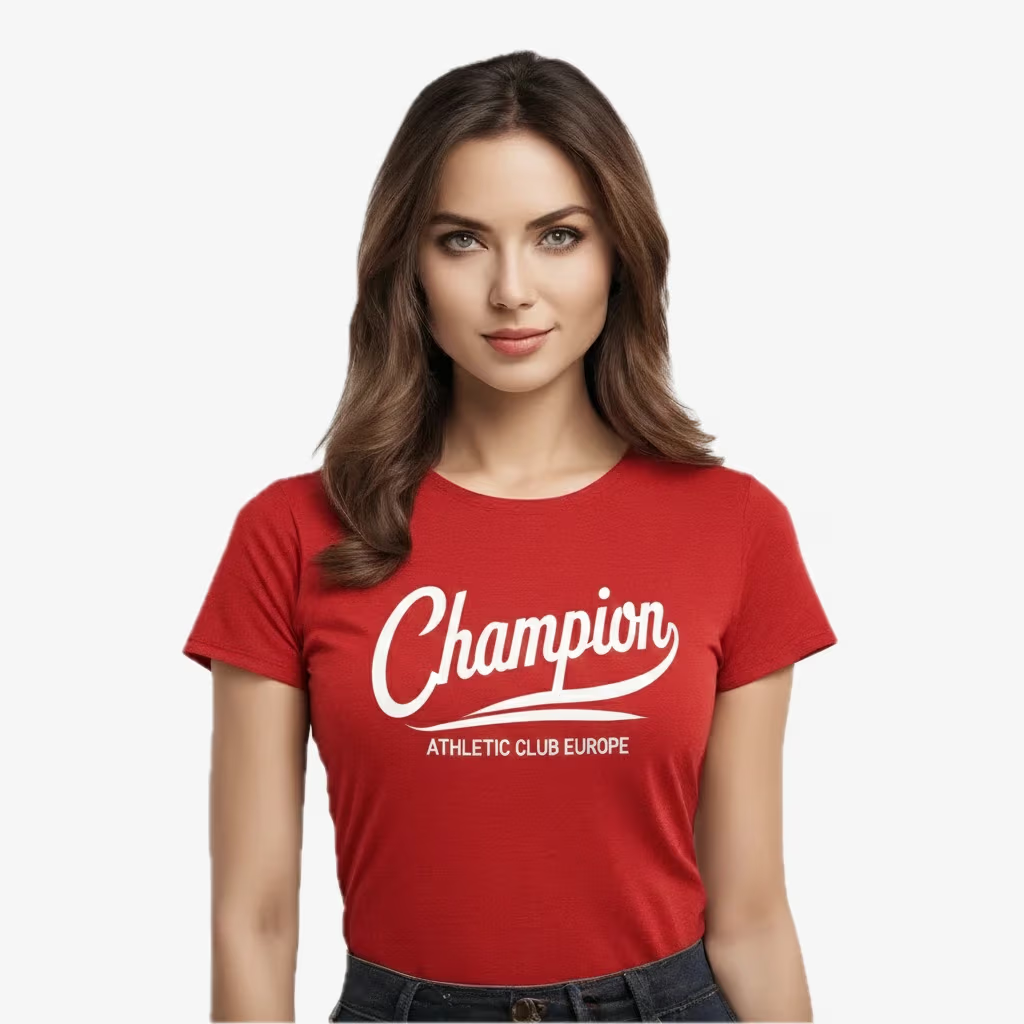
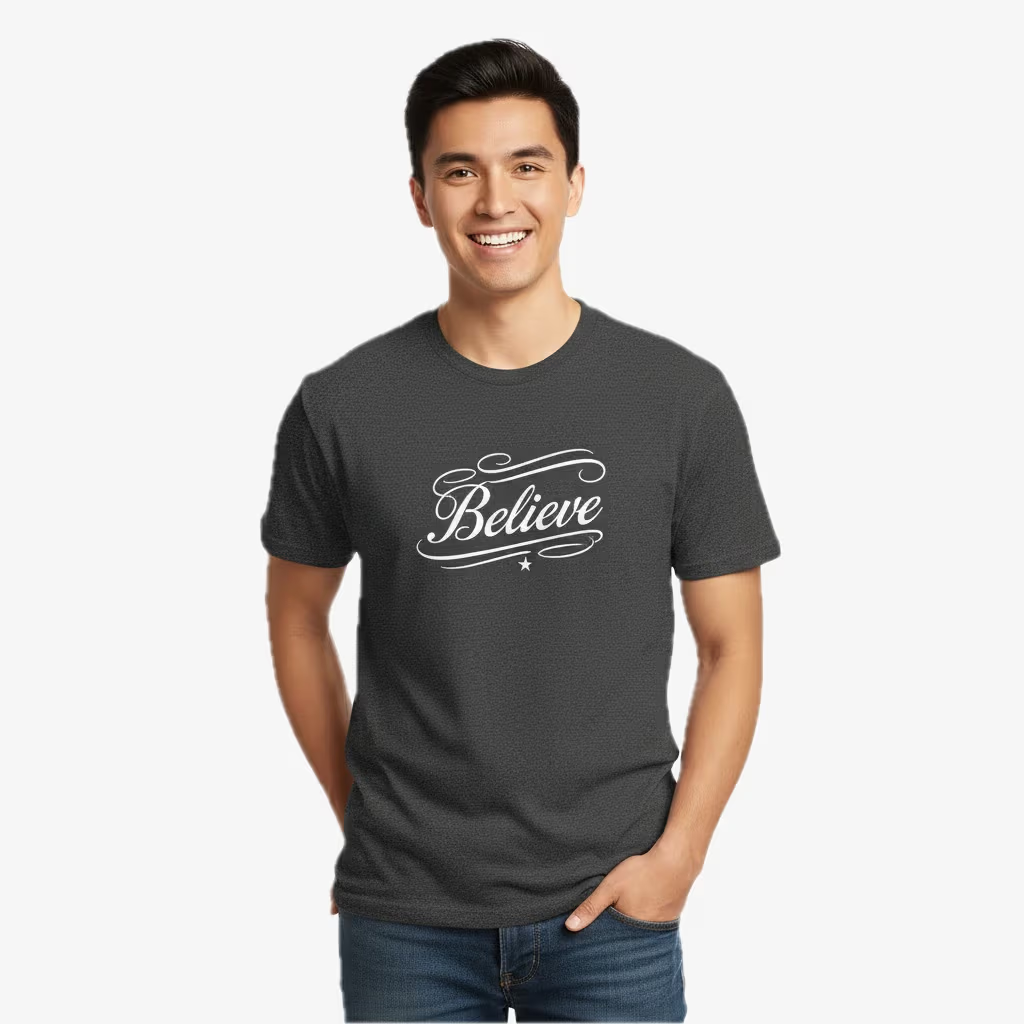
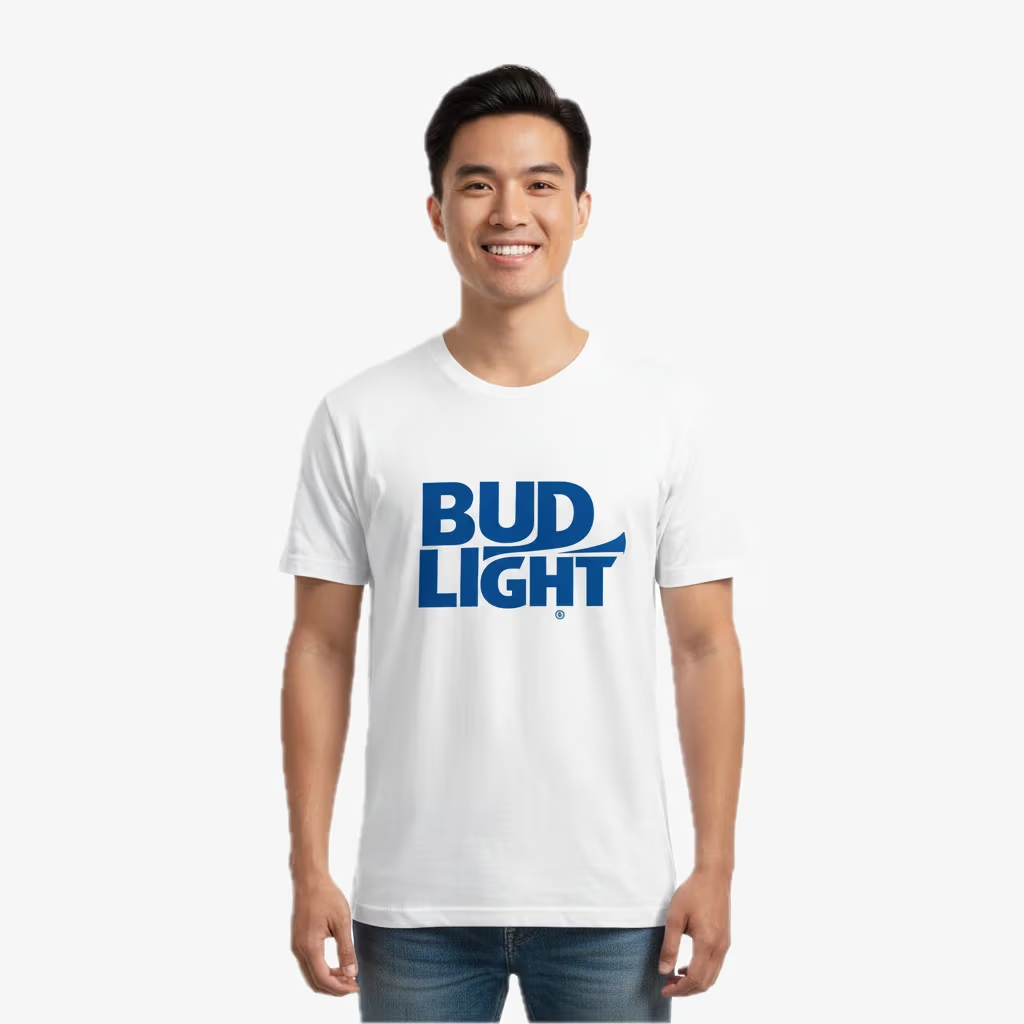
Brand promoting T-shirts need to work as clothing as well as visible brand communication. For Slovak importers, promotional agencies, retailers, distributors, corporate buyers, and apparel brands, that means the garment itself needs to match the intended audience, while the logo or promotional artwork must remain clear after production and washing.
SiATEX Bangladesh manufactures custom brand promoting T-shirts from buyer specifications. Production starts with the buyer's design, artwork, tech pack, measurements, fabric requirements, colour references, quantity, labels, packaging, and delivery details. The production team then handles costing, material sourcing, sample development, bulk manufacturing, quality control, packing, and shipment.
The same manufacturing model can support promotional apparel programs serving Slovakia and wider European distribution. Buyers supplying the USA, Canada, UK, Australia, Saudi Arabia, or other markets can also develop their T-shirt programs through the same Bangladesh production base.
The promotional purpose affects the garment specification. A T-shirt intended for a short campaign may have different requirements from one sold through retail stores or distributed as branded merchandise over a longer period.
Common specifications include:
Fabric choice affects print appearance, hand feel, shrinkage, colour performance and final costing. A heavy cotton T-shirt can provide a different retail impression from a lightweight promotional style, while blended fabrics may be selected for specific performance or cost requirements.
For brand campaigns where the T-shirt itself becomes part of the merchandise collection, construction details such as neck rib, shoulder reinforcement, sleeve opening, body length and stitching need to be defined before sampling.
A brand logo does not automatically require the same decoration method for every T-shirt. The artwork, fabric, print location, number of colours, order quantity and expected use all influence the production method.
Screen printing can be suitable for larger quantities and artwork with defined colour separation. Digital printing can be considered where the design contains more detailed imagery or tonal variation. Heat transfer may suit certain logo placements and artwork requirements, while embroidery can be used when the buyer wants a raised stitched treatment rather than a printed surface.
The artwork should be supplied in an appropriate production format with clear colour references and placement dimensions. The buyer should also specify whether the logo appears on the chest, back, sleeve, front panel or another location.
For Slovak promotional campaigns, the same specification can be prepared for different colourways while keeping the logo dimensions and placement consistent across the order.
SiATEX follows an order-based manufacturing process rather than selling pre-made garments from ready stock. Buyers provide the required specifications, and production is planned around the approved product.
The usual sequence is:
Specification review: We examine the artwork, fabric, GSM, composition, measurements, colours, labels, packaging and quantity.
Costing: Fabric consumption, construction, printing or embroidery, trims, packaging and other production requirements are considered before the quotation is prepared.
Sampling: A development sample is produced after order confirmation and initial payment so the buyer can review the physical garment and decoration.
Approval: Bulk production proceeds after the required sample and specifications are approved.
Manufacturing: Fabric preparation, cutting, sewing, printing or embroidery and finishing follow the approved specifications.
Quality control: Measurements, workmanship, appearance, print quality, colour consistency and packing are checked during production and before shipment.
Packing and delivery: Finished garments are packed according to the buyer's instructions and prepared for export.
This process is useful when a promotional T-shirt needs to follow an existing brand identity rather than simply carrying a basic logo.
The current SiATEX MOQ for basic items is 3,000 pieces per order. The final production requirement can vary according to the fabric, construction, colour, printing method and other specifications.
For buyers planning several promotional campaigns, production quantities should be separated by style and specification during the costing stage. A change in fabric composition, body construction, print method or colour can affect material consumption and production planning.
Lead time also depends on the product. For standard bulk production, the practical planning window is generally around 4 to 8 weeks after PP approval, depending on styling, material availability, quantity and quality requirements.
Sampling is planned before bulk manufacturing. This gives the buyer an opportunity to check fit, fabric, colour, artwork placement and finishing before the full quantity is produced.
Promotional garments often contain large printed areas or clearly visible logos, so quality control cannot focus only on sewing.
Relevant checks can include:
SiATEX uses AQL-based inspection procedures, including AQL 2.5 and AQL 4.0 depending on the buyer's requirements. Buyers can also arrange independent inspection through agencies such as SGS, Bureau Veritas, Intertek or Qima, with inspection costs handled by the customer.
Manufacturing is carried out through a network of certified partner facilities. Depending on the production facility and applicable product requirements, compliance credentials include BSCI, WRAP, ISO 9001, SEDEX, GOTS and OEKO-TEX Standard 100.
A promotional T-shirt can carry more than a front graphic. For a brand that intends to distribute the garment through retail or organized promotional channels, the complete garment identity can be customized.
Possible details include:
These details should be included in the specification before sampling because they can affect material sourcing, production planning and packing costs.
A company supplying promotional merchandise in Slovakia may also require different packaging from a fashion brand selling the same basic T-shirt through retail. Defining the distribution method early helps keep the product specification practical.
A promotional T-shirt quotation cannot be based on quantity alone. Fabric composition and weight are major cost factors, but decoration and garment construction can also change the final price.
The quotation may be affected by:
Providing a complete tech pack or detailed specification usually allows more accurate costing than sending only a logo image and a target quantity.
For buyers comparing Bangladesh production with sourcing from other manufacturing regions, the useful comparison is the complete finished specification, not simply the quoted price per T-shirt.
Brand promoting T-shirts are often purchased alongside other branded garments. A campaign may require polos for sales teams, hoodies for colder seasons, sportswear for events, or casual garments for promotional merchandise.
For related sourcing requirements, buyers can review our custom branded T-shirts for Slovakia as well as brand promoting T-shirts for Europe.
A broader European sourcing program can also include custom branded T-shirts for the UK or brand promoting T-shirts for the USA. For North American programs, buyers may also review custom branded T-shirts for Canada. For other international promotional apparel requirements, logo print promotional T-shirts for Australia provides another relevant sourcing reference.
These related pages can help buyers compare specifications across markets while keeping the manufacturing process centered on their own artwork and product requirements.
The product can be developed for several commercial applications, provided the garment specification matches the intended use.
Corporate buyers may require branded T-shirts for internal events, product launches, staff activities or customer-facing campaigns. Promotional agencies may order garments for advertising programs, exhibitions, public events and merchandise distribution. Retailers and apparel brands may use the same manufacturing capability for logo-based collections where the T-shirt is sold rather than given away.
Sports clubs, educational organizations and event organizers can also use customized T-shirts when consistent artwork, sizing and colour are required across a large group.
The key difference is in the specification. A retail T-shirt may need stronger attention to labels, packaging, fit and repeat-season consistency, while a short promotional campaign may prioritize print visibility, delivery timing and cost control.
A Slovak buyer can begin with an attached inquiry form and provide the information needed for costing:
Product: Brand promoting T-shirt
Design: Artwork, logo or reference image
Fabric: Composition and preferred GSM
Construction: Neck, sleeve, fit and other details
Quantity: Total pieces and quantity by colour and size
Colours: Pantone references or approved colour standards
Sizing: Measurement chart and size range
Branding: Labels, tags and decoration requirements
Packaging: Individual packing and carton instructions
Destination: Delivery location and address
If a finished reference sample exists, its measurements, fabric details and construction notes can also be supplied for evaluation.
The more complete the specification, the fewer assumptions are needed during costing and sample development. This is especially important when the T-shirts are part of a fixed promotional campaign with a defined launch date.
Yes. SiATEX Bangladesh manufactures custom T-shirts according to buyer specifications and supplies garments for international markets, including European buyers.
The current MOQ for basic items is 3,000 pieces per order. Exact requirements can depend on fabric, colour, construction and decoration specifications.
Yes. Buyers can specify printed or embroidered branding together with main labels, care labels, hangtags and packaging requirements.
There is no single fabric suitable for every campaign. Cotton, cotton blends, CVC and other knitted fabrics can be considered according to required GSM, hand feel, durability, print method, budget and end use.
Bulk production generally takes around 4 to 8 weeks after PP approval. The actual schedule depends on quantity, styling, materials, decoration and other production requirements.
Yes. Sample development is carried out before bulk manufacturing so the buyer can review the garment specification, fit, fabric, colour, artwork placement and finishing.
Yes. The manufacturing process can be planned around the buyer's required destination, packaging, labels and product specifications when the garments are intended for distribution across Slovakia and other European markets.
