Click here to


Clothing Manufacturer in Bangladesh Since 1987
Click here to

Click here to

Click here to
Click here to

Click here to

Click here to
Click here to
Click here to
Click here to

Click here to
Click here to
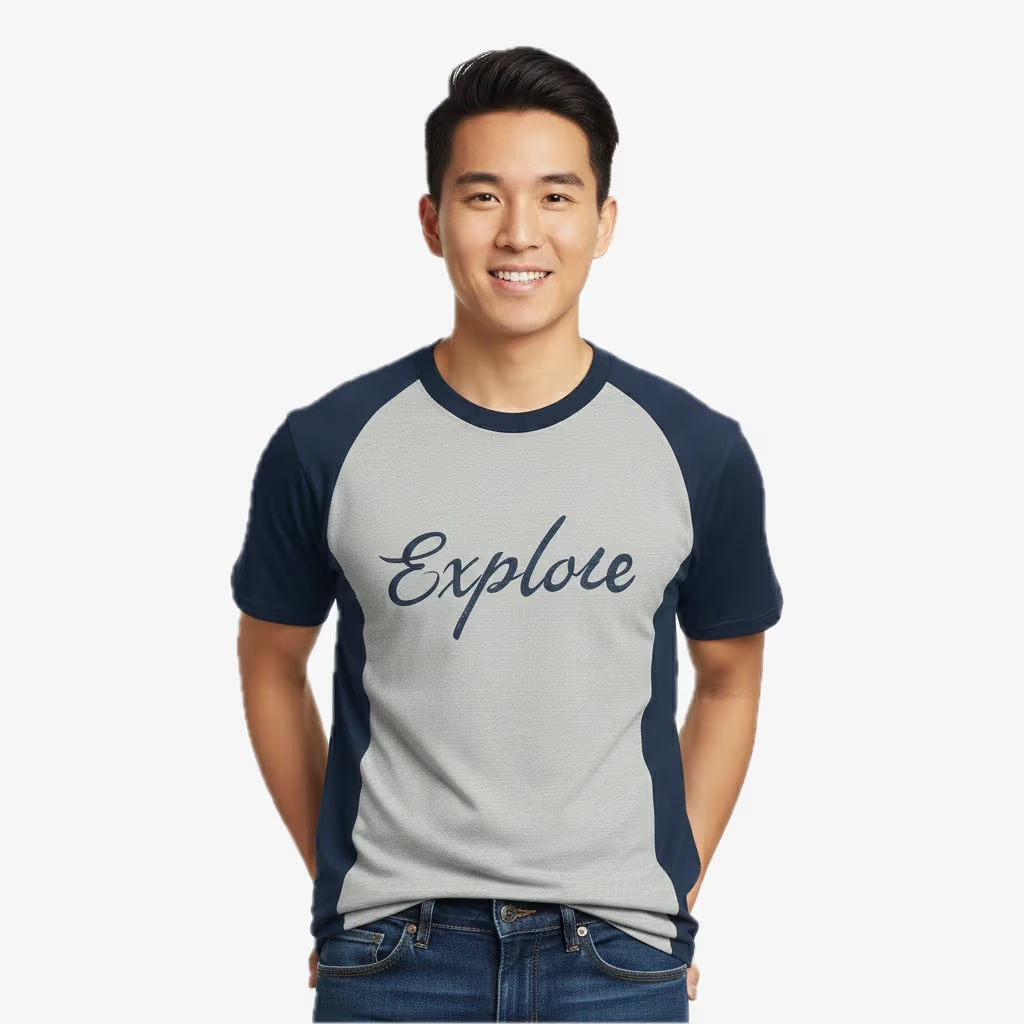
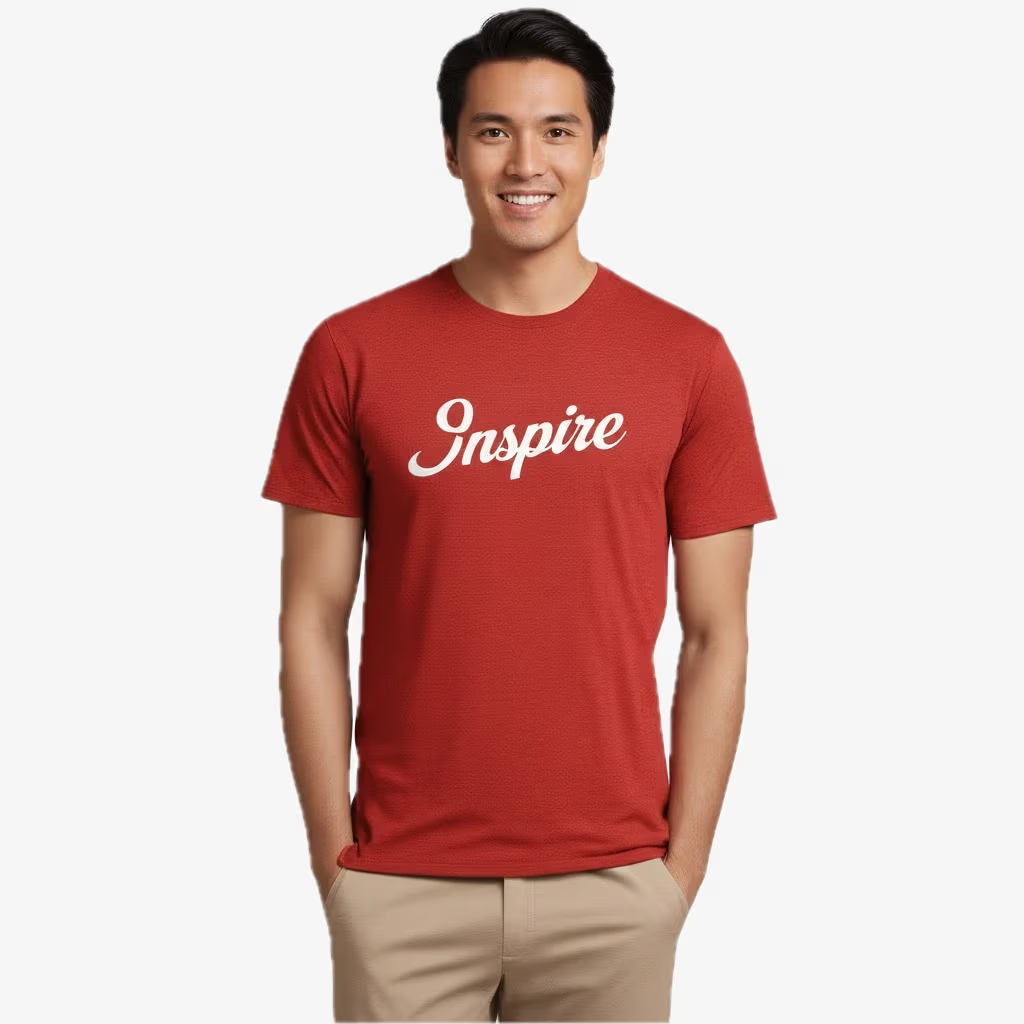
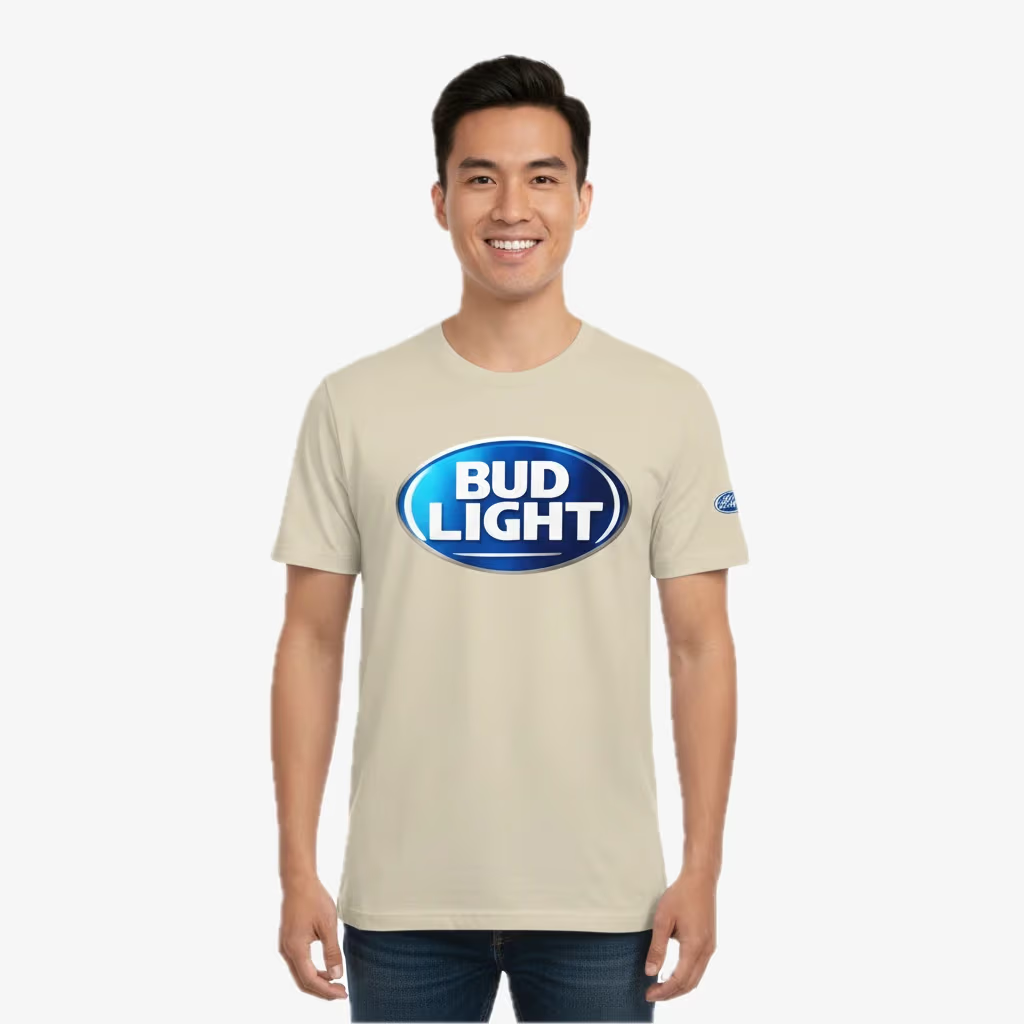
A branded T-shirt order can mean very different things to a Singapore buyer. A promotional agency may need 3,000 basic cotton shirts with a corporate logo. A fashion label may need a custom cut, branded neck label, special fabric, and retail packaging. A company organizing an internal event may prioritize delivery date and colour consistency.
Those requirements should not be priced as the same product.
SiATEX is a Bangladesh apparel manufacturer and exporter established in 1987. Its published manufacturing information covers T-shirts, polo shirts, sportswear, promotional apparel, OEM production, private-label garments, printing, embroidery, labels, packaging, quality control, and international shipping. It lists Singapore among its export markets.
Custom Branded T-shirts Exporters for Singapore
For a Singapore importer, the first useful document is a product specification sheet. It should identify the fabric, measurements, colours, branding, decoration, quantity, packaging, inspection requirements, and delivery destination.
Branded artwork receives most of the attention, but the underlying T-shirt determines fit, hand feel, durability, and how the decoration behaves.
SiATEX states that it works with cotton, polyester, cotton blends, organic cotton, bamboo, modal, lyocell, Tencel, and other fabrics.
For Singapore's warm and humid climate, buyers may evaluate lighter-weight cotton, cotton blends, or moisture-oriented polyester depending on the intended use. The correct specification still depends on the product category and target retail or promotional price.
A commercial RFQ should specify:
If the buyer wants a particular fit, a reference sample or technical measurement sheet is preferable to instructions such as "regular fit."
Wholesale blank T-shirts for branded apparel
A custom branded T-shirt does not have to mean a logo printed on an off-the-shelf shirt.
For private-label production, the brand can specify the garment shape, fabric, colour, labels, artwork, packaging, and finishing. SiATEX describes OEM and private-label production covering product development, fabric sourcing, sampling, manufacturing, printing, embroidery, labels, packaging, and quality control.
That distinction matters to Singapore clothing brands that want a consistent product rather than promotional merchandise.
Possible branding elements include:
Main neck label: Brand name, logo, or woven identity.
Size and care labels: Product information prepared according to the buyer's requirements.
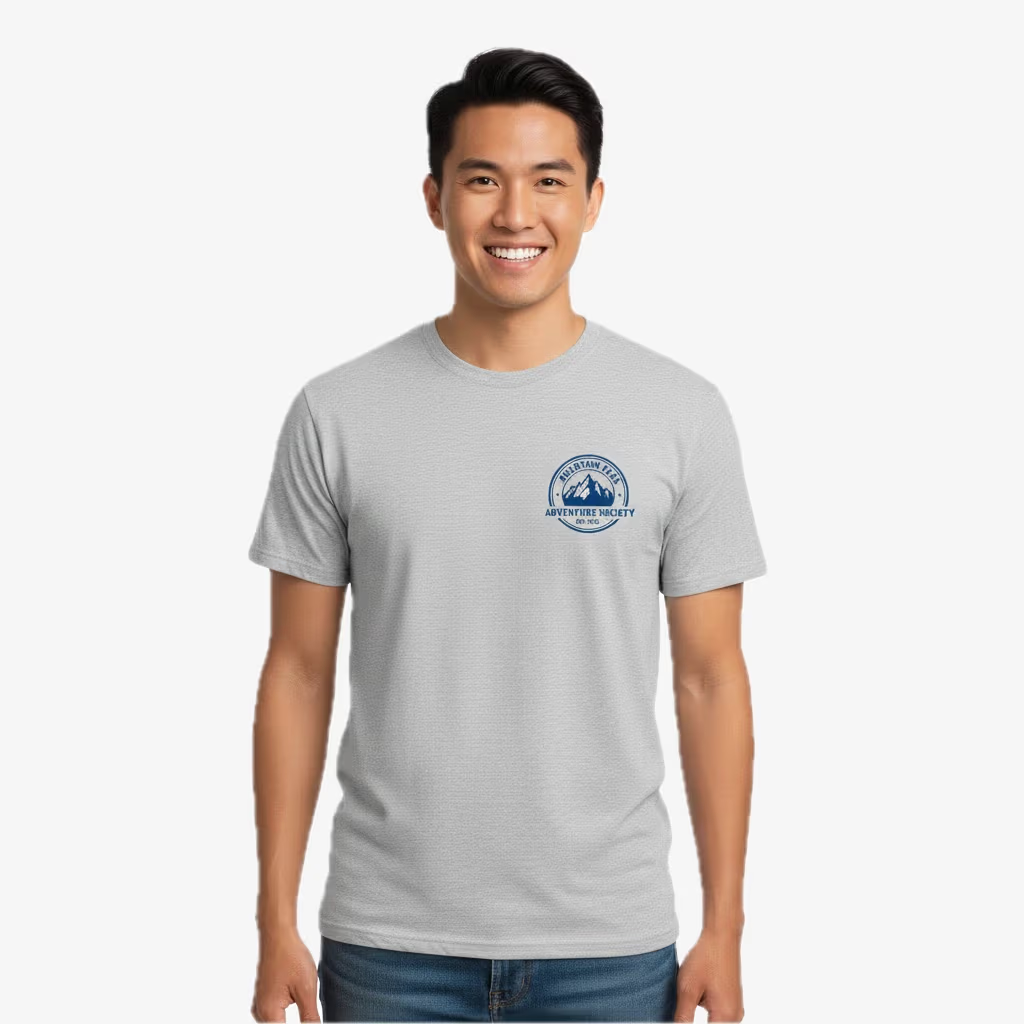
Chest or sleeve logo: Suitable for corporate uniforms, promotional programs, clubs, and retail garments.
Large front or back graphic: Useful for campaign merchandise and lifestyle collections.
Hangtags: Can carry product codes, branding, pricing information, or campaign details.
Packaging: Individual polybags, cartons, barcode labels, and other packing instructions can be incorporated into the production specification.
Private label T-shirt manufacturing for brands
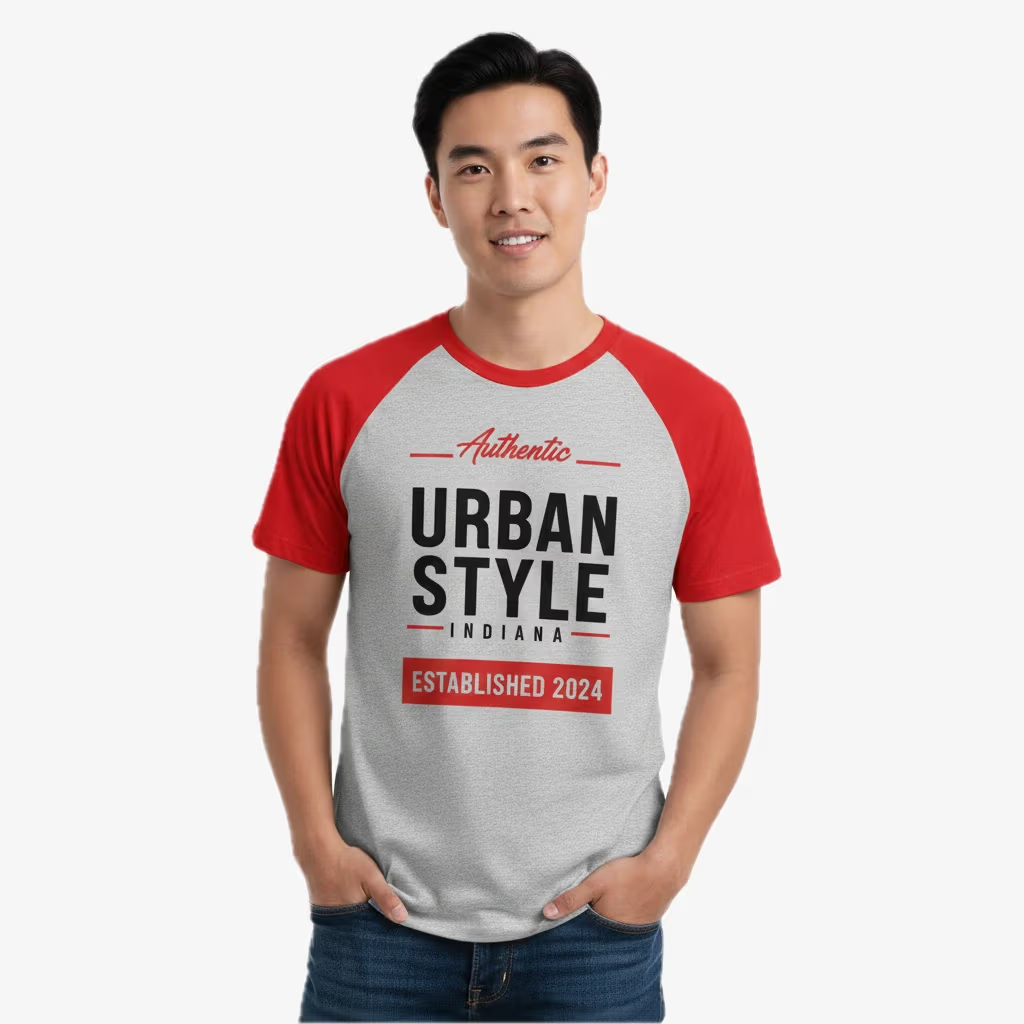
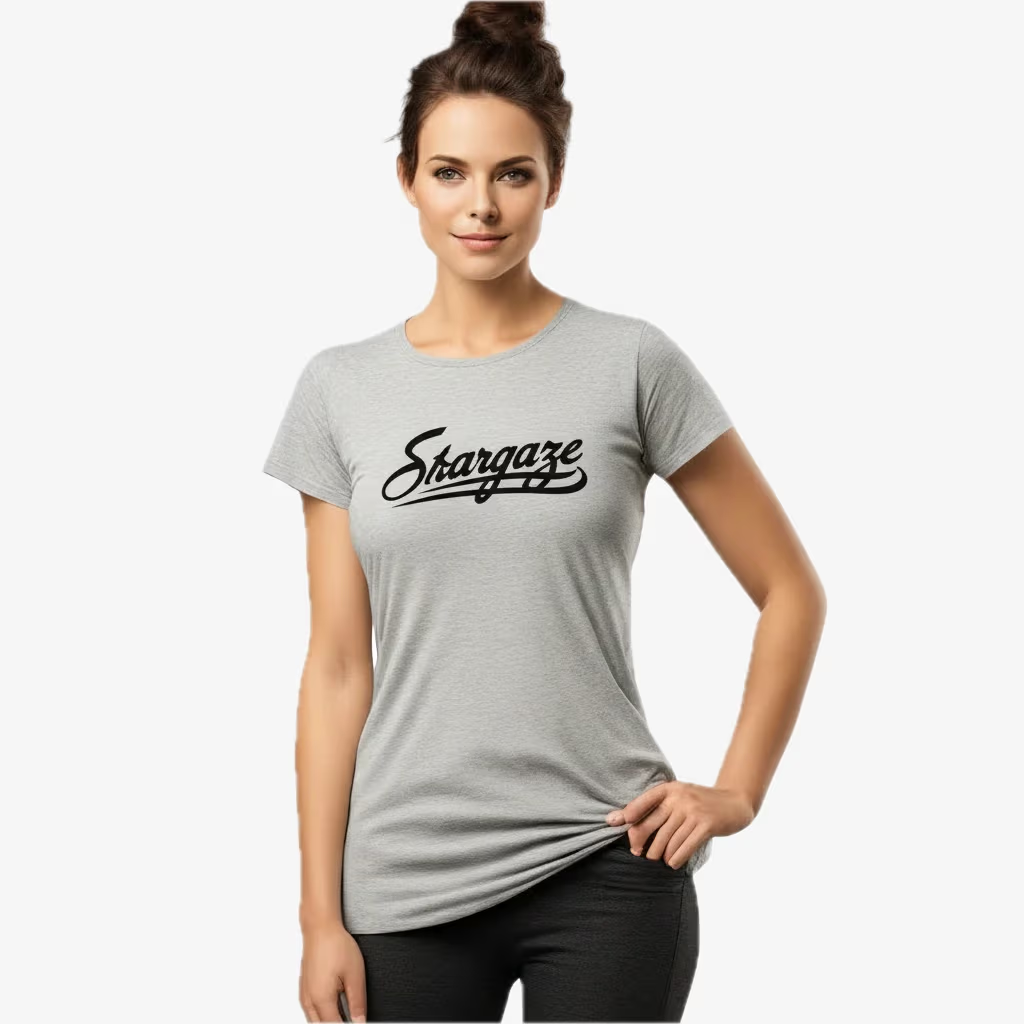
SiATEX lists screen printing, digital printing, sublimation, heat transfer, and discharge printing among its printing capabilities.
For a Singapore order, the printing method should be selected after the fabric, garment colour, artwork, quantity, and required finish are known.
Screen printing can suit repeated logos, slogans, and graphics with defined colour areas. It is often considered for larger-volume promotional orders.
Digital printing can accommodate detailed or multicolour artwork. Its suitability depends on the garment, artwork, and required appearance.
Sublimation is generally associated with polyester and can be useful where the design covers a substantial portion of the garment, particularly in sportswear.
Heat transfer may suit selected logos, names, numbers, and other graphics depending on the required finish and production volume.
Discharge printing can be considered for suitable dyed cotton garments when the desired print has a particular feel and appearance.
The artwork file should identify print dimensions, locations, colours, and any special requirements. A physical sample or approved pre-production sample is useful when the printed appearance is commercially important.
Export production should be planned from the required arrival date, not from the day the purchase order is issued.
The timeline can contain several separate stages:
Specification: Fabric, measurements, colours, branding, and packaging are finalized.
Sampling: The manufacturer develops a sample where required.
Approval: The buyer confirms measurements, construction, colours, artwork, and decoration.
Bulk production: Fabric preparation, cutting, sewing, printing, finishing, and packing take place.
Inspection: Finished garments are checked against the approved specifications.
Export: The shipment is prepared according to the agreed commercial and delivery terms.
SiATEX publishes different lead-time information across its product and manufacturing pages, including a general production range of 30 to 100 days for certain T-shirt orders. Actual timing depends on the product, quantity, materials, sampling, and production schedule.
For a Singapore promotional campaign, product launch, school program, or corporate event, the supplier should confirm an order-specific production and shipping schedule.
Minimum order quantity should be discussed before sample development and price comparison.
A standard promotional T-shirt and a fully customized private-label garment may have different production requirements. Fabric sourcing, custom colours, labels, garment construction, and printing can all affect the practical MOQ.
SiATEX publishes a general MOQ of 3,000 pieces for several T-shirt manufacturing programs, while also stating that MOQ can depend on the fabric and order configuration.
For that reason, a Singapore buyer should request the MOQ for the exact style rather than applying a generic number to every custom T-shirt.
The quotation should also separate costs associated with sampling, special fabric development, custom labels, printing, packaging, and bulk production where applicable.
A T-shirt can meet its size specification and still fail a branding requirement. A logo placed several centimetres away from the approved position, an incorrect print colour, or a wrong label can make a shipment unsuitable for its intended commercial use.
SiATEX states that its manufacturing process includes quality-control procedures and final inspection. Its published T-shirt manufacturing information identifies AQL 1.5/2.5 as a quality-control standard.
For a branded T-shirt order, buyers can define inspection around:
The approved sample should remain the reference point for bulk production. This is especially important for repeat orders where the buyer expects the new shipment to match a previous production run.
Singapore importers may have requirements imposed by their own customers, retail channels, brand policies, or applicable regulations. Certification needs to be assessed according to the actual product and supply chain.
SiATEX states that its factories have certifications including BSCI, WRAP, ISO, and SEDEX, and that it uses OEKO-TEX certified fabrics.
A buyer should request current certificates and verify the relevant factory, scope, and validity rather than treating a certification name as sufficient documentation.
The same approach applies to fabric claims. If a buyer requires organic cotton or a particular material certification, the relevant documentation should correspond to the fabric used in the actual production order.
For Singapore sourcing, a low garment price does not necessarily mean a low delivered cost.
The final commercial calculation can include:
SiATEX states that it can work with FOB, C&F, CIF, LDP, and DDP shipment terms.
These terms should be compared carefully. Two quotations with different Incoterms may cover different portions of the logistics and import process.
Clothing export quotation and sourcing request
A Singapore buyer can request both the product price and the applicable delivery basis. That makes supplier quotations easier to compare.
A promotional distributor usually does not need a custom garment block. A fashion company launching its own label may.
SiATEX describes cut-and-sew production using customer specifications and offers fabrics including cotton, cotton blends, polyester, bamboo, modal, lyocell, and other materials.
Custom cut-and-sew production can be considered when the buyer needs:
The buyer should provide a tech pack or detailed measurement sheet wherever possible. This gives the factory a measurable construction target.
Cut-and-sew T-shirt production in Bangladesh
A Singapore apparel business may distribute products beyond the domestic market. A manufacturer can support broader export programs when the buyer has a stable product specification and destination requirements are clearly identified.
SiATEX lists Europe, the USA, Canada, the UK, Saudi Arabia, Australia, and other markets among its international business coverage.
A garment specification should not automatically be treated as compliant for every destination. Labelling, documentation, packaging, customer standards, and import requirements can differ between Singapore and other markets.
For a brand selling in both Singapore and Europe, for example, it is better to identify the requirements for both markets before bulk production instead of changing labels after manufacturing.
A Singapore importer can reduce quotation delays by sending one complete product brief.
Style: Custom branded T-shirt
Quantity: Total units with size and colour breakdown
Fabric: Composition, weight, finish, and certification requirement
Fit: Measurements, tech pack, or approved reference sample
Colour: Garment colour and reference
Artwork: Print files, dimensions, colours, and positions
Decoration: Required print or embroidery method
Branding: Neck labels, care labels, hangtags, and packaging
Sample: Required sample type and approval process
Quality: Measurement tolerances and inspection standard
Destination: Singapore delivery location
Deadline: Required arrival date
Commercial terms: Preferred Incoterm and payment arrangement
For repeat production, the approved sample, artwork, measurement chart, and inspection criteria should be retained as the master reference.
The right exporter for a Singapore custom branded T-shirt order is therefore identified through the details of the production proposal: fabric, construction, printing, MOQ, sample process, quality controls, certification documents, shipping terms, and delivery schedule. Those details give an importer something concrete to compare before committing to bulk production.
