Click here to


Clothing Manufacturer in Bangladesh Since 1987
Eco-conscious poly cotton apparel development for Charlotte brands, promotional buyers, and wholesale programs
For apparel buyers in Charlotte, North Carolina, an eco-conscious T-shirt still has to work as a commercial product. It must fit properly. Hold its shape. Carry artwork cleanly. Arrive correctly labeled and packed. Sustainability matters, but it cannot compensate for poor manufacturing.
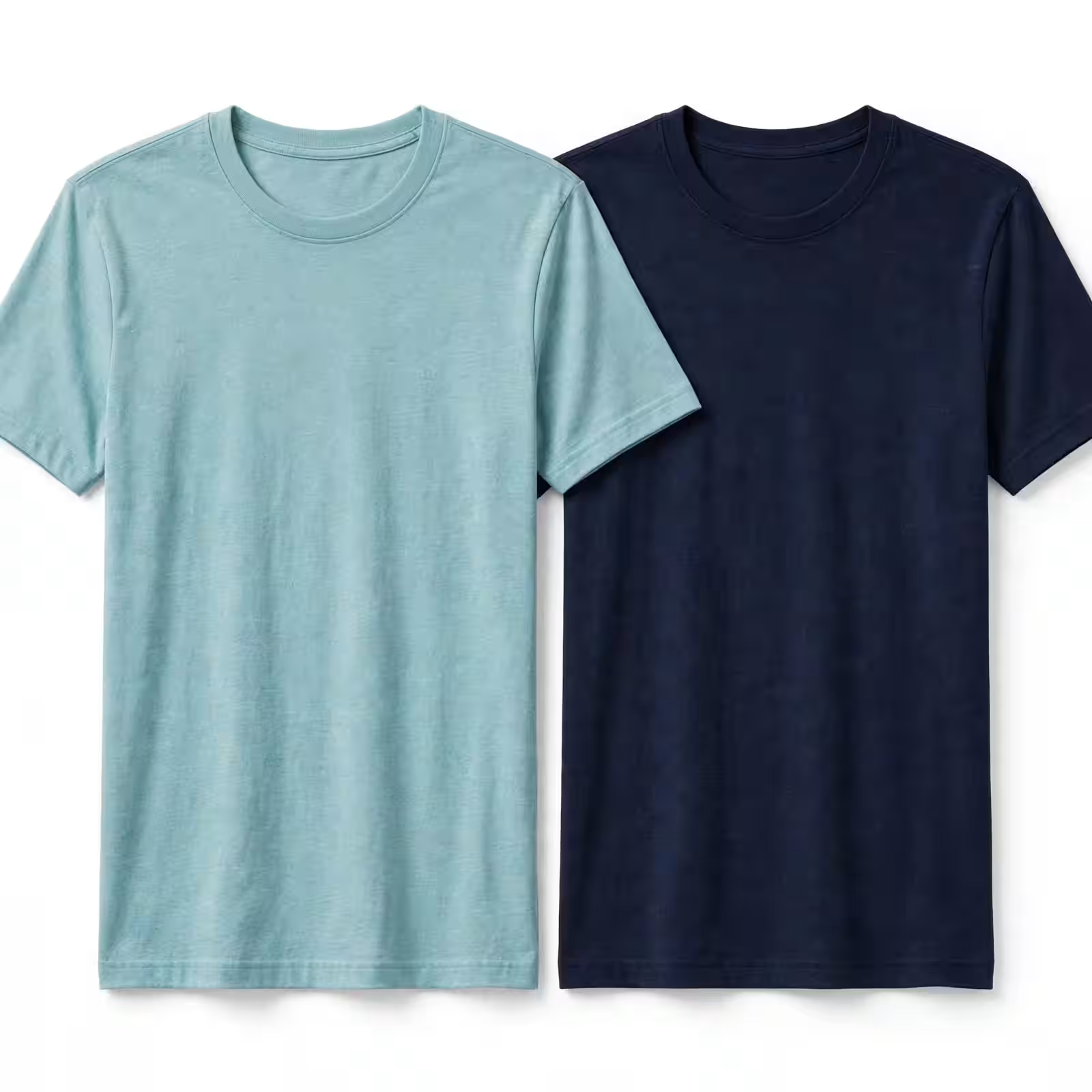
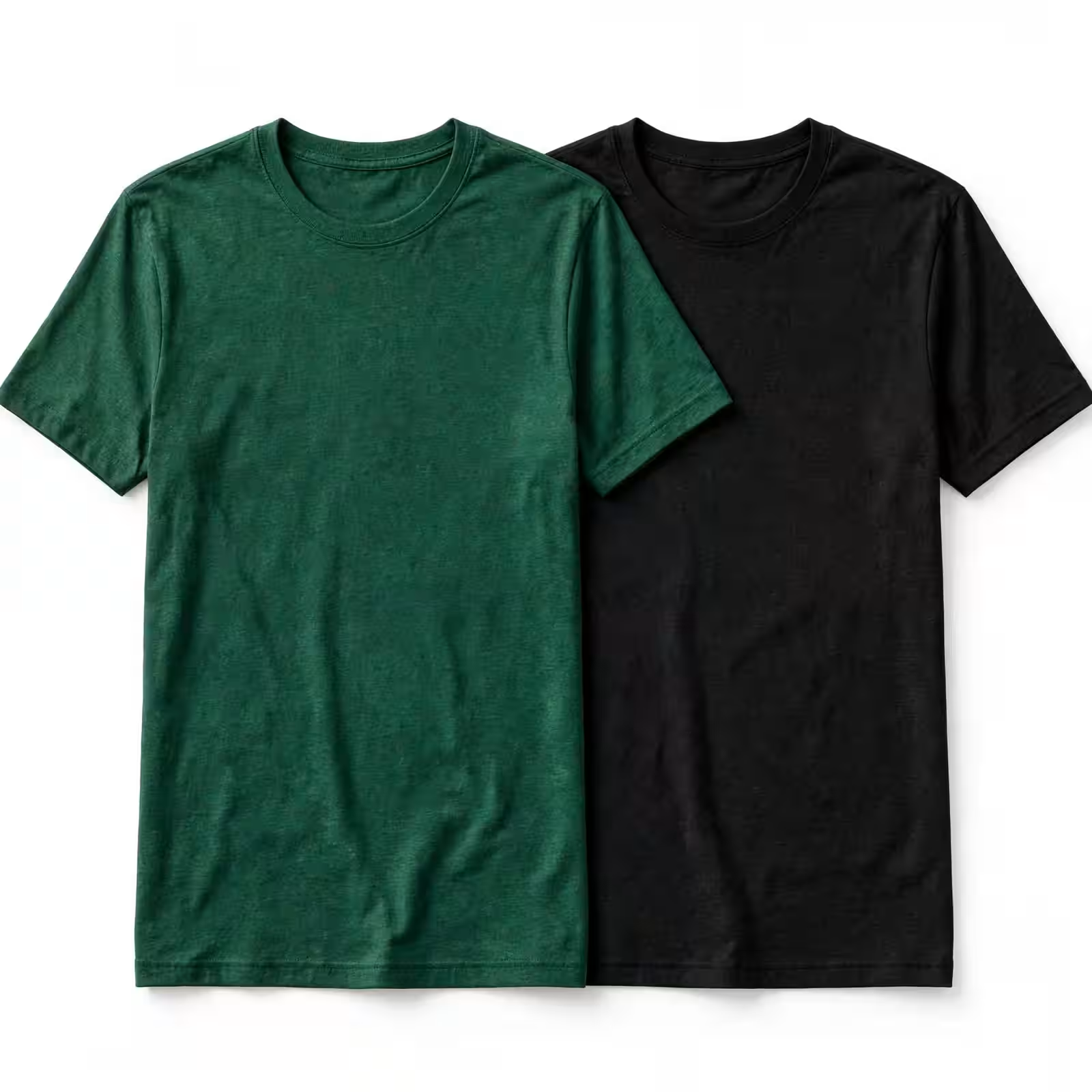
At Siatex Bangladesh, we manufacture Cotton/Polyester Blend T-Shirts for Charlotte promotional companies, fashion brands, corporate programs, schools, organizations, wholesalers, and private-label businesses. We develop garments according to the buyer's technical requirements, with fabric composition, weight, color, fit, decoration, trims, and packaging considered together.
The classic 50:50 construction offers a familiar cotton-rich feel combined with polyester's practical contribution to durability and dimensional stability. For buyers seeking a more responsible apparel program, we can also discuss material specifications, certifications, and production requirements during development.
They can, although the phrase “eco friendly” should never be treated as a blanket claim.
A 50:50 blend is not automatically sustainable simply because it contains cotton. The environmental profile depends on the fiber sources, dyeing processes, manufacturing controls, product lifespan, certifications, and what happens to the garment after use.
We therefore encourage Charlotte buyers to define the environmental requirements they actually need. If a project calls for certified materials, specific chemical standards, or documented sourcing practices, those requirements should be established before fabric development.
Our organic and blended T-shirt manufacturing capabilities give buyers room to compare material directions rather than treating one fabric construction as suitable for every product.
Lightweight does not simply mean “thin.”
A lighter poly cotton jersey can be appropriate for warm-weather promotions, outdoor campaigns, company events, charity programs, and casual branded merchandise. Yet reducing GSM too aggressively may affect opacity, drape, print appearance, or perceived garment quality.
We assess the intended end use before recommending a fabric specification. A Charlotte event T-shirt may require a different construction from a private-label fashion tee sold through retail channels.
Fabric construction, yarn, finishing, color, and decoration all influence the final garment.
That is why we prefer development through specification and sampling rather than making assumptions from a product name alone.
Customization begins with the garment brief.
Our customization options include:
For Charlotte brands that need decorated garments rather than blanks, our custom T-shirt printing manufacturing service can be incorporated into the product-development conversation.
Decoration deserves technical attention. Ink coverage, print placement, fabric shade, artwork scale, and curing requirements can all affect the finished appearance.
It is easy to overlook during product development.
Cotton can respond to washing and heat differently from polyester. Fabric relaxation, finishing, cutting allowances, and garment construction therefore need to be considered together.
We recommend defining measurement tolerances for the approved specification and checking critical points such as body length, chest width, shoulder width, sleeve length, and neckline dimensions.
For Charlotte retailers and promotional distributors, consistency across sizes is essential. A shirt that changes noticeably after laundering can create customer complaints even when the original sample looked excellent.
Our approach is to address dimensional behavior during development, when changes are still practical.
A digital Pantone reference is useful, but physical approval remains important.
Fabric absorbs dye differently depending on construction, fiber characteristics, preparation, and finishing. Printed artwork introduces another variable because ink sits on or interacts with the textile surface.
We work around buyer-approved color standards and can develop the fabric and decoration against those requirements.
For repeat programs, keeping an approved physical standard is especially valuable. If a Charlotte brand reorders the same corporate green or promotional blue several months later, the reference gives the production team a tangible benchmark rather than relying on memory or an old screen image.
Sampling gives us an opportunity to test the product concept before manufacturing moves into its larger production phase.
Our sampling services include:
We encourage buyers to inspect the sample like a customer would. Feel the fabric. Measure it. Examine the collar recovery. Check stitching. Review artwork placement. Where appropriate, laundering or dimensional testing can be incorporated into the buyer's quality requirements.
For a Charlotte apparel company, that hands-on stage can reveal a problem long before cartons are dispatched.
Our production system is designed for specification-driven apparel rather than a one-size-fits-all product model.
Key capabilities include:
Our mixed-garment production capacity is approximately 900,000 pieces per month. This figure represents mixed garment types, not dedicated production of one particular 50:50 T-shirt.
SiATEX also states that its T-shirt manufacturing uses cotton, poly cotton, bamboo, organic cotton, and other materials, with fabric content determined according to customer requirements.
Yes. Our manufacturing programs are structured for international apparel sourcing.
Charlotte-based businesses can source for the broader USA market while international buyers may require different specifications for Canada, UK, Europe, Australia, Saudi Arabia, UAE, Oman, Spain, Germany, France, Portugal, Poland, or Czech Republic.
Those markets can involve different labeling, documentation, packaging, testing, and material expectations. We recommend establishing the destination-market requirements at the beginning rather than attempting to retrofit them after production.
For businesses building a larger product assortment, our private-label T-shirt manufacturing service can provide a route for developing additional branded styles around the same sourcing relationship.
Responsible sourcing requires evidence, not broad marketing language.
Buyers may need documentation covering materials, chemical standards, factory compliance, social responsibility, or supply chain practices depending on their organization and destination market.
SiATEX's published T-shirt information identifies OEKO-TEX Standard 100 certification for fabric and lists quality controls including AQL 1.5 / 2.5.
Where a buyer requires BSCI, SEDEX, or other compliance documentation, those requirements should be discussed with our sales team during supplier qualification so the relevant documentation can be clarified before the order proceeds.
The most useful starting point is a clear product specification.
Send us the desired blend ratio, GSM, size chart, color references, artwork, fit, labels, packaging requirements, certification needs, and intended market. Our sales and merchandising teams can review the project and guide sampling and production planning.
For buyers requiring clean garments for their own decoration operation, our blank T-shirt supply and manufacturingcan also be considered.
For Charlotte businesses, the opportunity is broader than simply sourcing a basic T-shirt. We can help develop a garment around a defined material brief, brand identity, fit requirement, decoration program, and responsible sourcing expectation.
Contact our sales team to discuss Cotton/Polyester Blend T-Shirts for your Charlotte apparel, promotional, wholesale, or private-label program.